

How to Convert Images for Shopify and E-commerce
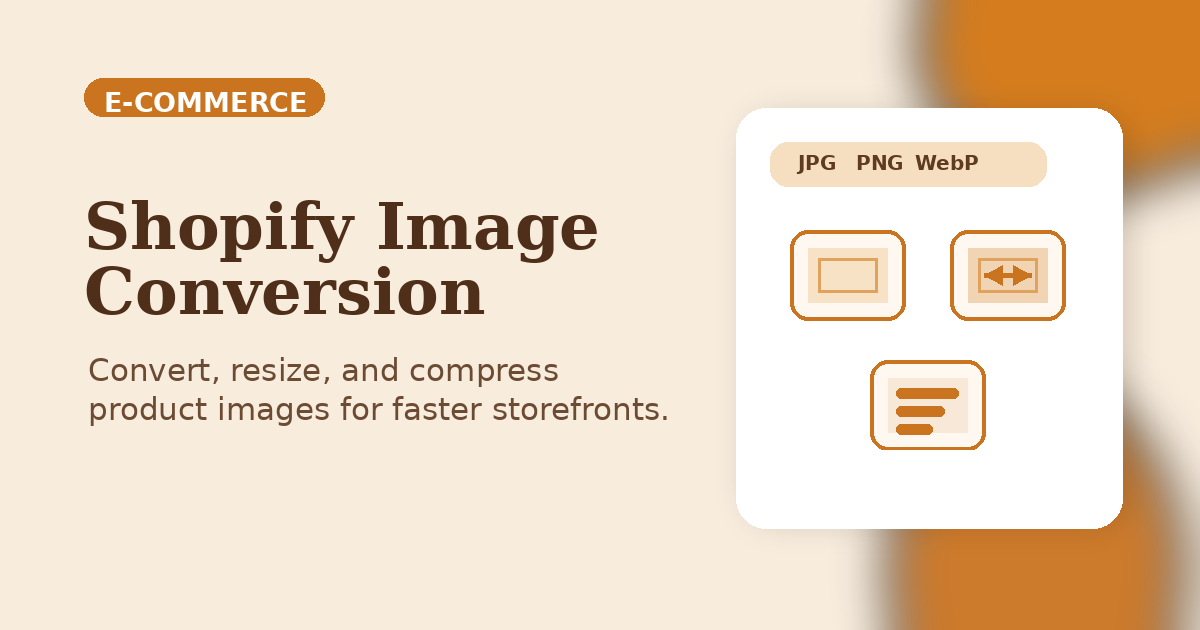
How to Convert Images for Shopify and E-commerce
E-commerce images have to do more than look good. They need to load quickly, stay sharp on product pages, and fit the storefront layout without creating oversized files. That usually means choosing the right format before you upload.
If you want a fast browser workflow, start with the Anything Tools Image Converter. You can use it together with the Image Compressor and Image Resizer to prepare store-ready product images in a few minutes.
Why image conversion matters for Shopify stores
Store owners often upload whatever file they already have: a PNG from a designer, a giant JPEG from a camera, or a screenshot that was never prepared for commerce.
That creates predictable problems:
- product pages feel heavy on mobile
- gallery images load slower than they should
- transparent assets are larger than necessary
- banners and thumbnails look inconsistent
- exported marketplace images are harder to reuse elsewhere
Image conversion is the step that turns "we have the picture" into "we have the right storefront asset."
Which formats are usually best?
For most Shopify and e-commerce workflows:
- use JPG for product photos where smaller file size matters
- use PNG when you need transparency or crisp flat graphics
- use WebP when you want a modern web-friendly format with good compression
If you are comparing transparent image use cases specifically, our guide to WebP vs PNG for logos and transparent images covers that decision in more detail.
A practical conversion workflow
For most stores, this sequence works well:
- Start with the cleanest source image you have.
- Convert the file into the format that matches the use case.
- Resize it to the dimensions the layout actually needs.
- Compress it until the file is lighter without obvious visual damage.
- Upload a few test images and check the storefront on mobile and desktop.
That order matters. If you compress the wrong format first or resize too late, you usually create avoidable quality loss or extra work.
When to convert product photos to JPG
JPG is often the safest choice for standard product photography:
- fashion product shots
- home goods on plain backgrounds
- close-up detail images
- lifestyle photos
- collection thumbnails
It is a strong option when the image is photographic and transparency is not needed. In many stores, converting oversized PNG product photos to JPG is one of the fastest ways to reduce file weight.
When to keep PNG
PNG still makes sense when the image needs:
- transparent background
- sharp edges for simple graphics
- interface mockups or diagrams
- logos or badges placed over different surfaces
If the only reason a file is PNG is habit, it is worth testing whether JPG or WebP would perform better for that asset.
Why resizing is part of conversion
A product image can be the right format and still be too large. Uploading a huge original file for a small storefront slot wastes bandwidth and slows down first load.
Use the Anything Tools Image Resizer to prepare images closer to their actual storefront role:
- product gallery image
- category thumbnail
- homepage banner
- social promo creative
The goal is not the biggest image possible. The goal is the smallest image that still looks correct in context.
Compression is the final cleanup step
After conversion and resizing, compression usually removes the last chunk of unnecessary weight. This is especially useful for large product catalogs where small savings per image add up fast.
The Anything Tools Image Compressor is useful here because it gives you a quick quality tradeoff without leaving the browser.
Check a few details before exporting:
- texture on fabric or packaging
- edges around product cutouts
- text inside labels or screenshots
- zoomed product details
If those hold up, the file is usually ready.
Common e-commerce image mistakes
These problems show up again and again:
- uploading giant originals directly from a camera
- keeping PNG for every product photo
- compressing before choosing the right target format
- skipping a mobile storefront check
- using mismatched sizes across a collection page
The fix is usually simple: convert, resize, compress, then verify in the real layout.
Final takeaway
Converting images for Shopify and e-commerce is not a one-click decision about format alone. It is a short workflow: pick the right format, resize to the real use case, compress carefully, and confirm the page still looks sharp.
If you want a clean browser-based process, start with the Anything Tools Image Converter, then finish the asset with the Image Resizer and Image Compressor.
Related Posts
How to Compress Images for Faster Page Speed
A practical workflow for smaller pages, cleaner Core Web Vitals, and fewer visual artifacts.
Bilder vor dem PDF-Export vorbereiten
Praktische Checkliste zum Skalieren, Komprimieren, Sortieren und Konvertieren von Bildern vor dem PDF-Export.